
Criminality’s latest update matters because it can change how seasonal events, movement, and encounters feel in the current build. This Criminality update guide breaks down the confirmed Hallows 2026 Part 1 details, the official update history, and practical ways to adapt without relying on invented patch notes.
Criminality Update Guide: What the Latest Build Confirms
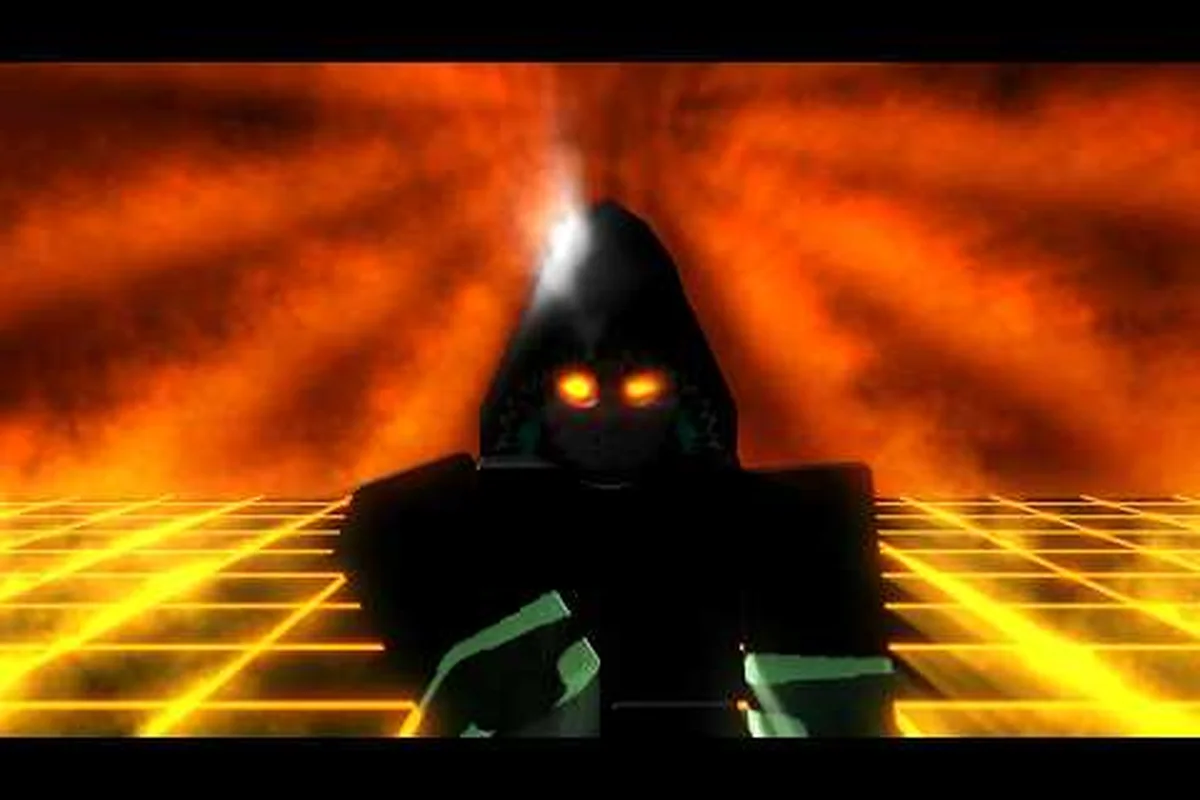
The official Criminality channel released Hallows 2026 Part 1 on October 19, 2026. The short official video is the clearest primary source for the event’s current promotional direction, while the channel’s broader release history helps separate this update from earlier seasonal content and major game changes.
What CRIMCORP has not published is just as important. The developer has not released numerical damage values, fire rates, magazine sizes, weapon ranges, XP rates, level caps, bounty values, or Robux prices. Consequently, this guide avoids turning visual impressions or community guesses into supposedly confirmed balance figures.
| Confirmed update topic | Verified status | Practical interpretation |
|---|---|---|
| Hallows 2026 Part 1 | Released October 19, 2026 | The newest documented seasonal update |
| Official event video | Published by the Criminality channel | Use it to verify event presentation and current messaging |
| Detailed weapon statistics | Not published by CRIMCORP | Avoid unsupported tier rankings or damage claims |
| Detailed economy values | Not published by CRIMCORP | Evaluate earnings by actual in-game results |
| Current code milestone | 371,609 likes on October 24, 2026 | The promised code threshold is still pending |
| New code threshold | 400,000 likes | No active code is listed yet |
This distinction gives the Criminality update guide a clear purpose: it separates documented facts from unknowns so players can make better decisions. When a tutorial claims that a weapon was buffed by a specific percentage, look for a matching official statement or a dated, credible test before treating that number as fact.
How the official update history fits together
The channel documents a long sequence of substantial releases. The lineup includes Animation Rework #1 from December 8, 2022; Summer Update #1 through #3 and Gun Case #2 and #4 during 2023; V2.1 Brawl on October 11, 2023; Hallows 2023; Winter 2023; Winter Part 2; Hallows 2024; Infection Unleashed on November 28, 2024; Winter 2025 on December 19, 2025; and Hallows 2026 Part 1 on October 19, 2026.
That timeline shows that Criminality updates often carry different names because they may introduce seasonal content, broader systems, combat revisions, or several of those together. A seasonal release should not automatically be read as a complete balance overhaul, and an older overhaul should not be used to predict the precise effect of the newest event.
Cross-Checking an Announcement Against the Build
Use a three-step process when an update claim circulates. First, find the original CRIMCORP announcement or official Criminality video. Second, check the publication date and whether the statement concerns this exact build. Third, test the behavior in-game without converting a single result into a universal rule.
| Claim type | Best source to check | Confidence standard |
|---|---|---|
| Event release or visual feature | Official channel or group page | Treat dated official material as confirmed |
| Weapon damage or fire rate | Official notes, then controlled testing | Require a published number or clearly labeled test |
| Cash or bounty rates | Official notes, then session records | Compare earned totals over comparable conditions |
| Character animation change | Official release history and in-game observation | Confirm the visual behavior |
| Future content or fixes | Official announcements | Label it as forthcoming until released |
This routine keeps the Criminality guide factual while still making it practical, especially when an official event trailer shows a reward or mechanic without a matching balance note. Treat the footage as evidence of a planned feature, not proof of its final payout or activation timing. For example, if a CRIMCORP trailer displays a new cash payout, check the event page and dated patch notes before recording the amount; if those sources are silent, label the figure unconfirmed until in-game rewards or comparable session records establish it. This prevents a visually confirmed feature from being mistaken for a verified damage, bounty, or fire-rate change.
Hallows 2026 Part 1: What Players Can Actually Verify
Hallows 2026 Part 1 is the latest documented entry in the game’s seasonal release history. The official video confirms the update’s arrival and serves as the central visual reference, but the available research does not include a complete CRIMCORP text log listing every changed mechanic, reward value, or numerical adjustment.
That means the best Hallows analysis is deliberately evidence-based. We can identify the release date, place it in the update timeline, and explain which questions remain unanswered. We cannot responsibly claim a particular map, enemy, weapon tier, drop rate, or reward total without a verifiable official source.
| Fact-check category | What is confirmed | What remains unconfirmed |
|---|---|---|
| Release | Part 1 launched October 19, 2026 | Whether later parts are planned and their contents |
| Seasonal identity | The event is titled Hallows 2026 Part 1 | Complete event rotation details |
| Official media | A 30-second official Criminality video was published | A full transcript of balance values |
| Rewards | The event is associated with seasonal play | Exact reward quantities or probabilities |
| Combat changes | The broader game has a history of combat updates | Any Hallows-specific damage modifiers |
| New content | The video presents the current update | A complete catalog of items and enemies |
Reading the official event presentation
The official Hallows 2026 video is short, so it is better treated as an official announcement than as a full manual. Watch for the event branding, displayed interfaces, and any explicit text. Avoid assuming that scenery, lighting, or a brief on-screen object represents a new permanent game system unless CRIMCORP says so.
Seasonal presentations often emphasize atmosphere and rewards, while detailed changes may appear separately in announcements or as the update rolls out. The video proves that Hallows 2026 Part 1 is official; it does not, by itself, prove every mechanic suggested by community discussion.
Distinguishing live observations from facts
A player may report that a fight feels faster, a route appears different, or an item seems more available. Those observations can guide your next session, but they should be labeled as community reports or platform-specific observations. Gameplay can vary by server, device, lag, and the particular moment tested, so one encounter cannot establish a universal balance change.
For a stronger Criminality update guide, note the date, device, match context, and observable result. If a community test suggests that movement is easier to control during the event, treat it as a temporary practical tip until the developer publishes a permanent explanation. This method gives useful information without presenting speculation as a patch note.
Seasonal content and long-term progression
Seasonal events can encourage players to revisit familiar activities, but the available official material does not provide a new XP multiplier, level cap, or progression formula. It would be wrong to say that Hallows 2026 permanently raises progression speed without a published value. A safer approach is to focus on repeatable habits, reliable income routes, and combat fundamentals that remain useful outside the event.
The Criminality event guide for 2026 provides a useful place to organize seasonal goals, but the official channel should remain the final authority for event-specific rewards and availability. For example, players can use the guide to compare event rewards against expected time spent on repeatable activities, while checking the in-game Criminality event notices for the current reward table, cooldowns, and unlock conditions. If the guide lists a reward that has not yet appeared in the event interface, treat that entry as provisional rather than assuming it is guaranteed, since seasonal availability can change before or during the event window.
Criminality How to Get Better After an Update
Updates can alter timing, presentation, or the relative usefulness of familiar routines, yet improvement still depends on reliable decision-making. The best Criminality how to get better strategy is to rebuild a simple loop around awareness, positioning, resource choice, and review rather than reacting to every early claim about the patch.
| Priority | Action | Why it helps after an update |
|---|---|---|
| 1 | Recheck basic movement and encounter timing | Small control changes can affect opening options |
| 2 | Compare two safe cash routes | Separates useful income habits from patch speculation |
| 3 | Practice one encounter style | Builds repeatable decisions without chasing unverified weapons |
| 4 | Record short session results | Reveals patterns that isolated matches can hide |
| 5 | Check official notes before changing builds | Prevents decisions based on unsupported tier claims |
Rebuild your match routine
A concise routine works better than a long list of improvisational actions. Start by learning the area, identify the next objective, assess risk, engage only when your position is adequate, and review the result once the encounter ends. This is especially valuable after an update because small differences in timing can produce large changes in outcomes.
The beginner guide to Criminality can help with the basic loop, including learning the game’s structure and controls. Once that foundation is stable, focus on one small adjustment per session rather than changing several behaviors at once and losing track of which one helped.
Use comparison rather than universal claims
Ask whether a route is more consistent for your current conditions, not whether it is the fastest for everyone. A faster route that ends in repeated losses may produce less usable progress than a calm route that supports a repeatable cycle. Compare completion, losses, earnings, and time across multiple sessions instead of judging from one match.
| Review measure | Better question | Weak question to avoid |
|---|---|---|
| Cash | Did this route produce a stable total across sessions? | Is this universally the fastest cash route? |
| Combat | Did I create better openings and recover afterward? | Which weapon has the highest damage? |
| Movement | Did I lose fewer avoidable encounters? | Is movement definitely faster? |
| Survival | Could I repeat the result under similar pressure? | Was this match simply lucky? |
| Update impact | Which behavior changed after the patch? | Does this prove a hidden buff? |
Learn the new build without abandoning fundamentals
A fresh Criminality guide should help players identify meaningful differences, not encourage reckless experimentation. Check whether an official post mentions a known problem, then test the affected action in a low-risk environment. Keep the old strategy if it remains effective, and replace it only when repeated evidence shows a meaningful difference.
This is where Criminality tips become more than a list of shortcuts. Position, timing, awareness, and sound choice remain durable principles because each affects how quickly a player reads movement, reacts to a target, and avoids creating a risky confrontation. A Criminality update may change spacing, audio cues, or the timing of a common route, but the underlying response is still the same: observe the environment, identify useful openings, and act only when the advantage is clear.
Criminality Guide to Official Fixes and Announcements
A trustworthy Criminality guide must distinguish a released fix from a planned change. The research confirms that CRIMCORP communicates through official channels and that the official Criminality channel maintains a detailed release history, but the available material does not provide a full Hallows 2026 changelog with every bug identifier.
| Announcement type | How to interpret it | Safe action |
|---|---|---|
| Released fix | Described as fixed or corrected | Test the affected behavior in the current build |
| Issue under review | Problem has been reported but not resolved | Avoid spreading the report as a confirmed fix |
| Planned change | Developer states intent to alter something | Wait for the implemented release |
| Visual observation | A player noticed a changed result | Retest before making balance claims |
| Creator response | CRIMCORP answers a recurring question | Follow the official channel for full context |
What counts as a confirmed fix
A confirmed fix should identify the behavior that changed, the version or release in which it appears, and the source making the claim. “The stun is fixed” is vague unless the announcement explains the affected action and current version. Likewise, a before-and-after clip can show that a visual issue changed while still lacking exact numerical information.
The safest practice is to record the date of the post and test the same situation again. If a problem persists, document the device, mode, and observable result for a future report. This keeps troubleshooting factual and prevents old clips from being mistaken for current behavior.
The current code situation
The official page promises a new code when the channel reaches 400,000 likes. As of October 24, 2026, the documented count was 371,609, and there was no active code listed. That means players should not treat unofficial strings circulating online as redeemed or official rewards.
A threshold-based code also creates a useful checking habit. Compare the current count with the published goal, then verify any released string against the official Criminality announcement. Avoid adding a code merely because a third party labels it “working”; a visible page is not proof of activation.
Where announcements should be checked
The official Criminality YouTube channel, its official group page, and the official Discord form the verification chain. The channel is especially useful because its history identifies major releases, while community messages can surface individual fixes. Compare dates carefully because an older comment may describe a problem that was corrected in a later update.
When an announcement says a fix is “coming,” it should remain classified as coming until the relevant build is live. This approach gives the Criminality update guide more credibility because it preserves the distinction between a promise, a rollout, and a completed correction.
Criminality Tips for Navigating Unconfirmed Update Claims
Fast information is valuable only when it is accurate. The strongest Criminality tips begin with source quality, then use controlled testing to turn a claim into a practical decision. This approach matters most during seasonal releases, when visual excitement and community speculation can travel faster than full patch notes.
| Information source | Trust level | Appropriate use |
|---|---|---|
| CRIMCORP announcement | Highest | Confirm features, fixes, and official timing |
| Official Criminality video | Highest | Verify event presentation and release details |
| Official Discord messages | High when dated and specific | Check clarification and known issues |
| Reproducible community testing | Medium | Form a temporary practical conclusion |
| Individual player report | Low to medium | Identify what to retest, not a universal fact |
| Unsourced tier list | Low | Avoid using it for important build decisions |
Five Questions That Expose a False Update Claim
Before changing your approach, ask five questions. Who made the claim? Which date does it refer to? Is it about this current build? Is the claim numerical, visual, or behavioral? Can you reproduce the result under comparable conditions? If the answer to any question is uncertain, label the claim accordingly and keep your strategy conservative.
This process is particularly effective when a post says an item was buffed, nerfed, or newly added. Those terms often circulate even when the only documented change is cosmetic. A confirmed announcement may be precise, but when it is not, the responsible answer is that CRIMCORP has not published the relevant details.
Recording Outcomes Before Adjusting Behavior
Record the weapon or encounter, the outcome, and the surrounding conditions. Repeat the same scenario several times, and change only one behavior, such as positioning or route selection. This makes your own evidence much more useful because you can determine which adjustment produced a different result.
A controlled test does not replace official data, especially for complex systems, but it can reveal a reliable personal advantage. The Criminality combat guide can supply the foundations for comparing openings, defensive choices, and recovery rather than relying on an unverified damage ranking.
Avoid making a new build around one video
A short video often sells the update’s atmosphere rather than its entire mechanical depth. Build a new loadout only after confirming relevant item behavior in the live game. Likewise, do not abandon an established cash route because a creator claims a temporary event route is superior without comparable results.
For money, use the Criminality cash guide to compare repeatable routes, then factor in losses and time. A route that looks profitable in a single clean run may be weaker once interruptions and failed encounters are included, so record complete sessions rather than only successful clips.
What the Current Criminality Update Means for Players
The strongest conclusion supported by the available sources is that Hallows 2026 Part 1 is confirmed, documented, and tied to the official Criminality channel’s October 19, 2026 release. The event has an official video, while detailed numbers for combat, progression, economy, and rewards remain unpublished. This Criminality update guide therefore treats visible changes as things players can verify and unsupported balance claims as unresolved.
The broader update history also shows continuity. Animation work, brawls, seasonal events, and infection-themed content have appeared across different releases, which is a reminder not to assign every prior system to the newest patch. Read the current announcement, retest affected behavior, and keep your strategy grounded in repeatable outcomes.
| Final takeaway | Why it matters |
|---|---|
| Treat the official channel as the primary record | It provides the clearest release history and current messaging |
| Keep numerical claims labeled | No official damage, economy, or progression figures are available |
| Retest changed behaviors | Live results can guide decisions without becoming fabricated patch notes |
| Use durable fundamentals | Positioning, timing, awareness, and route comparison remain valuable |
| Check code claims carefully | The 400,000-like threshold had not been reached as documented |
Criminality players can get more from each update by separating three layers: confirmed announcements, repeatable personal observations, and unverified speculation. That hierarchy turns the Criminality guide into an actionable resource while keeping the Criminality tips honest. The newest update is worth exploring, but the best response is measured verification rather than panic, hype, or unsupported build advice.
Frequently Asked Questions
What is the latest Criminality update?
The latest documented update is Hallows 2026 Part 1, released on October 19, 2026. The official Criminality channel published a 30-second event video, and its release history identifies the update. CRIMCORP has not published a complete text changelog with numerical combat, economy, progression, or reward values.
Did Hallows 2026 change weapon damage or progression speed?
CRIMCORP has not published specific Hallows 2026 damage, fire-rate, XP-rate, level-cap, or similar numerical values. Any community claim about a buff, nerf, or progression increase should be treated as an observation until confirmed in an official announcement or reproduced through clearly labeled testing.
Is there an active Criminality code in October 2026?
There was no active code listed in the available official information on October 24, 2026. The official page promises a new code at 400,000 channel likes, while the documented count was 371,609. Because the threshold had not been reached, strings circulating elsewhere should not be presented as official active codes.
How should players handle Criminality update feedback?
Keep feedback specific by recording the date, device, match type, action attempted, and visible result. Check whether the issue is already fixed, is under review, or remains unresolved. A short reproducible report is more useful than a broad claim because it helps CRIMCORP test the exact behavior without adding unsupported details.
What Criminality tips work when official patch details are limited?
Use a controlled test method: record the same Criminality match type, route, weapon, and action before and after the patch, then compare time-to-kill, hit success, movement, and survival results. A 30-second event video alone cannot verify damage or progression changes, so label all comparisons as community observations and separate confirmed release information from measured behavior.
Focus on durable fundamentals such as positioning, timing, awareness, and repeatable route selection. Compare complete sessions instead of trusting one clip, and check official announcements before changing a build. This approach is especially useful for understanding how to get better after an update without relying on invented statistics or unverified tier rankings.