
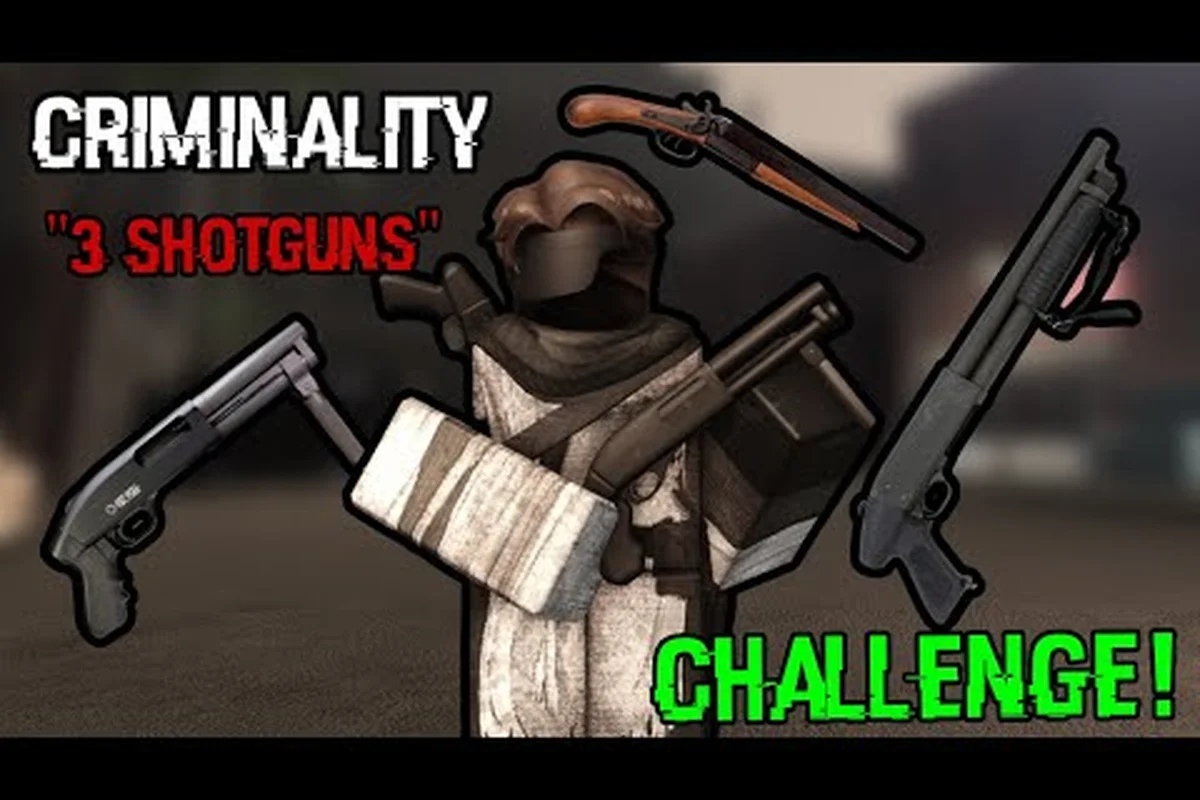
The criminality best shotgun is the Super-Shorty, the game’s only listed shotgun, and its value depends on access and close-range tactics. Because official damage figures are not published, this guide explains the Super-Shorty by role, unlock method, and practical loadout options.
Criminality Best Shotgun: The Super-Shorty Overview
The Super-Shorty is the only shotgun in Criminality’s published weapon catalog, so it holds the criminality best shotgun position by default rather than by winning a detailed damage comparison. Its compact identity suggests a close-range role, while the available information does not confirm pellet counts, spread, or damage falloff. That limitation matters because players cannot responsibly rank raw output using unsupported numbers.
The Super-Shorty is obtained through the Weaponry pass, although it also remains available through the game’s weapon system for a reported in-game price. Players who want a broader view of available equipment can consult the complete Criminality weapon list to see where the shotgun sits among pistols, rifles, submachine guns, and melee equipment.
| Evaluation point | Super-Shorty conclusion | Evidence status |
|---|---|---|
| Shotgun options listed | Super-Shorty is the only listed shotgun | Confirmed by the game’s current weapon listing |
| Primary role | Compact close-range option | Role-based analysis, not an official stat |
| Damage per shot | Not published | No confirmed number available |
| Pellet count | Not published | No confirmed number available |
| Effective range | Not published | No confirmed distance available |
| Unlock route | Weaponry pass or available in-game purchase route | Confirmed availability information |
| Tier position | Best shotgun, but not automatically the game’s best weapon | Role-based conclusion |
What Makes It the Only Shotgun Choice
A single-option category simplifies selection without making the Super-Shorty universally optimal. If your preferred fighting range is close, the weapon is immediately relevant because there is no second shotgun to compare. If you need a versatile rifle, longer-reaching firearm, or low-commitment backup, another weapon may serve the encounter better.
This distinction is important when evaluating criminality weapon damage. Damage is only one component of usefulness, and a weapon can be strong in practice without leading a statistical ranking that the developer has not released. The Super-Shorty should therefore be judged by how quickly it can be used, how comfortably it fits the inventory, and whether its intended range matches the situations in which you prefer to fight.
The Published Information Gap
Criminality has not published official damage, fire-rate, magazine, range, or pellet data for its weapons. The absence of those figures prevents a responsible chart that assigns unsupported values to the Super-Shorty. Community observations may describe performance, but those reports do not override the lack of an official stat table, and they can change as the game is updated.
| Statistic players often request | Official figure available? | Best responsible approach |
|---|---|---|
| Damage per pellet | No | Describe likely role without assigning numbers |
| Total shot damage | No | Avoid unsupported damage multipliers |
| Shells per magazine | No | Plan around the current in-game display |
| Fire rate | No | Test your own timing in live play |
| Maximum range | No | Judge by target distance and hit feedback |
| Reload duration | No | Compare practical encounter flow |
| Pellets per shell | No | Avoid claiming a fixed spread pattern |
Understanding this evidence gap prevents false precision. The useful conclusion is not that the Super-Shorty has secretly high damage; it is that it is the only available answer when a player specifically wants Criminality’s shotgun role.
Super-Shorty Access, Equipment Role, and Inventory Fit
Access and inventory management can be as important as weapon performance. The Super-Shorty can be acquired through the Weaponry pass, and it is also listed as purchasable through the in-game weapon system. Those two routes let players compare convenience against available funds rather than treating a premium unlock as the only way to use the weapon.
Pass Access Versus the In-Game Purchase Route
The pass route can be attractive when you already want broader access to the pass’s associated benefits. The in-game purchase route may be more practical for players who want the Super-Shorty without buying a broader unlock package. The right choice depends on your budget, play time, and whether you value the surrounding pass content.
Information about acquisition costs and other weapon prices is also covered in the Criminality dealer and weapon price guide. This matters because the Super-Shorty’s shotgun value cannot be assessed in isolation: a strong backup can be less useful when it takes too many resources away from a primary firearm.
| Acquisition method | Main advantage | Main consideration |
|---|---|---|
| Weaponry pass | Access tied to a broader pass package | May be unnecessary if the pass has little value for you |
| In-game purchase | Direct route to the Super-Shorty | Requires sufficient in-game funds |
| Saving for a different firearm | Better access to another weapon category | Leaves you without a dedicated shotgun |
| Keeping funds for a primary gun | Supports a stronger general-purpose setup | No shotgun option is equipped |
Managing the Criminality Weapon Inventory
Your inventory should reflect the way you actually fight, not a museum of every available item. A practical inventory may reserve one slot for a primary firearm, another for a shotgun or situational weapon, and a third for the criminality best melee weapon that fits your movement style. If you routinely heal, sprint, or use utility items, account for those needs rather than carrying redundant damage dealers.
The Super-Shorty inventory role is flexible because it can serve as a close-range specialist or backup firearm. It becomes less efficient when treated as a primary weapon for distant encounters, since the available information does not support claiming a long effective range. A compact weapon earns its place by complementing another loadout rather than by filling every combat situation.
Primary and Secondary Loadout Plan
A balanced loadout pairs the Super-Shorty with a firearm that handles medium or long engagements, then adds melee only when it provides a clear advantage. This setup preserves the shotgun’s close-range identity while giving you a response to targets that you cannot comfortably engage with it.
| Fight distance | Recommended equipment | Reason |
|---|---|---|
| Very close | Super-Shorty plus melee backup | Both support immediate engagement |
| Medium | General-purpose firearm plus Super-Shorty | The shotgun remains available as a closer-range option |
| Long | Long-range firearm plus a different close-range tool | The Super-Shorty’s role becomes less central |
| Mixed encounters | One versatile firearm plus melee | Avoid overcommitting inventory space |
| Resource-limited | Keep one dependable firearm | Reduce the risk of spreading funds too thin |
Shotgun Range and Damage Without Invented Weapon Stats
The most useful way to discuss the criminality best shotgun is through observable roles, not fictional numbers. The Super-Shorty is presented as a compact firearm, and the absence of published range and damage data means players must judge it through the target distances they encounter and the weapon’s behavior in the live game.
Reading Damage From Practical Outcomes
When testing damage, count successful engagements rather than estimating from a single animation. Keep the target type, distance, aim, and available cover consistent, then note whether the shotgun creates a quick, reliable opening. Because the game has no published damage chart, repeated controlled tests are more defensible than online claims that assign a fixed value.
The best assessment also accounts for criminality weapon damage in context. A close-range burst that ends an encounter before a target can retaliate may feel more valuable than a theoretical hit count, especially if every shot requires accuracy. Conversely, a weapon that needs a difficult close approach can lose its practical advantage even if its individual hit is powerful.
Establishing a Personal Effective Range
Effective range depends on where you can maintain a shot. In live play, mark distances by familiar environmental references rather than pretending to measure exact meters, since official range data is unavailable. Record whether the Super-Shorty offers useful results at your typical engagement distance and note the point where targets become difficult to hit.
| Testing condition | Keep consistent | What to record |
|---|---|---|
| Distance | Same reference points for every attempt | Whether the target remains comfortably engageable |
| Target movement | Similar speed and direction | Whether aim leads become difficult |
| Cover | Comparable cover placement | Whether the shot can be taken without a long exposed approach |
| Weapon state | Fresh ammunition and comparable condition | Whether the result changes across repeated attempts |
| Objective | Same encounter goal | Whether the weapon helps finish or escape |
Community experience can help identify practical patterns, but it should be framed as reported play rather than official evidence. The official Criminality YouTube channel is a useful place to check first-party game media, including a short Gun Case video, although it does not provide the stat sheet needed for a numerical ranking.
Why the Super-Shorty Is Not Automatically the Overall Best Weapon
Shotguns commonly reward close proximity, while other weapons may offer better reach, handling, or ammunition efficiency. The Super-Shorty therefore cannot be declared the best weapon in Criminality without narrowing the comparison to shotguns. Its category distinction is real, but category dominance does not erase the different strengths of rifles, pistols, submachine guns, and melee equipment.
A fair verdict uses three separate labels: category leader for the only listed shotgun, situational contender when a close-range weapon fits the encounter, and overall contender only if its practical results justify the inventory and purchase cost. This prevents the criminality best shotgun from being treated as a universal answer.
Best Melee Alternatives for Close-Range Loadouts
The criminality best melee weapon cannot be selected from one official damage table because the game has not published comparable figures for melee options. Instead, match the weapon to your preferred approach, including whether you want quick access, stronger commitment to a close attack, or an inexpensive backup for emergency use.
Choosing a Melee Backup
A melee backup can be especially valuable alongside the Super-Shorty. It saves ammunition during pressure situations, remains immediately available, and gives the loadout another answer when a firearm is awkward to draw. The important comparison is practical handling rather than a fabricated damage ranking, because each option can have a different attack speed, reach, or cost.
The broader Criminality weapon loadout guide can help organize primary, secondary, and melee choices. A player should carry only the tools they can use comfortably, because an unused item consumes space and may expose a loadout’s weakness in exactly the encounters it was supposed to support.
| Consideration | Better when… | Practical reason |
|---|---|---|
| Attack speed | You need frequent emergency strikes | Quicker inputs can fit more active encounters |
| Reach | Your targets remain slightly farther away | More reach may reduce exposure during an approach |
| Cost | Funds are limited | A low-cost backup protects other purchases |
| Familiarity | Your style depends on fast reactions | A practiced tool can be used more consistently |
| Inventory value | One slot must cover several close-range needs | Versatility may outweigh a single theoretical advantage |
| Animations | You prefer readable, deliberate attacks | Clear feedback can make timing easier to understand |
Shotgun and Melee Synergy
A shotgun-melee pairing works best when each tool has a distinct role. Use the firearm to create a decisive opening at close range, then use melee for movement pressure, emergencies, or situations where switching to the shotgun would be awkward. Avoid carrying two weapons that solve the same problem if doing so leaves your primary firearm underfunded.
| Encounter | Shotgun contribution | Melee contribution |
|---|---|---|
| Surprise at close range | Fast close-range pressure | Backup if the firearm is not ready |
| Push toward a target | Creates an opening before contact | Supports the final approach |
| Retreat under fire | Potential deterrent | A way to act while repositioning |
| Resource preservation | Handles suitable targets without full ammunition use | Handles the remainder |
| Tight corridor fight | Can pressure a nearby opponent | Useful if the target closes distance |
Because the official channels do not publish universal melee damage values, avoid declaring a permanent winner based on community impressions alone. The criminality best melee weapon for you is the one you can deploy without animation uncertainty and that complements your firearm’s preferred range.
Shotgun Loadouts for Limited and Event Weapons
Limited weapons and event weapons can change a loadout’s character, but they should be evaluated by actual availability rather than assumed to be permanently obtainable. Criminality limited weapons may be tied to passes, rotating offers, or past events, while event weapons depend on the event’s availability. Neither category should be treated as a guaranteed permanent option.
Handling Criminality Limited Weapons
A limited firearm is valuable when it offers a combat style the permanent arsenal lacks, yet it may be a poor foundation for a new inventory. Save a decisive slot for it if you already have a dependable primary, secondary, and melee option. Do not delay essential gear merely because a limited item might disappear from rotation.
| Situation | Limited-weapon decision | Reason |
|---|---|---|
| You have an empty slot | Equip it if its role fits | It adds coverage without replacing essentials |
| You lack a primary firearm | Keep saving for core gear | Reliability matters more than rarity |
| The limited item duplicates a permanent gun | Compare handling and role | Rarity alone does not improve usefulness |
| The item is leaving rotation | Use it before the deadline | Confirm the official availability window |
| It is a premium purchase | Review your budget first | Availability does not guarantee value for every player |
The limited Criminality game pass guide provides a closer look at limited-game-pass considerations. A pass can be attractive when it combines a wanted firearm with other useful rewards, but the Super-Shorty remains relevant when the pass’s shotgun is unavailable or a player prefers a different route.
Using Criminality Event Weapons
Event weapons should be considered temporary loadout features unless the developer explicitly states otherwise. They can provide a reason to test a new combat style, but event availability may change, so verify the current event page before committing funds or rearranging an inventory. The Criminality event and limited-item guide can help with current availability checks.
| Event context | Best loading choice | Why |
|---|---|---|
| Event weapon has a distinct role | Keep it alongside a permanent primary | Limits risk if the event ends |
| Event weapon is an upgraded option | Equip it for eligible encounters | It may perform better in that role |
| Event weapon is decorative rather than superior | Use a functional permanent tool | Cosmetic rarity does not improve combat value |
| Event ends unexpectedly | Preserve a versatile permanent setup | A fallback prevents wasted activity |
| New event item fits an empty slot | Add it without changing essentials | It provides upside with little disruption |
Budget Allocation Across Weapon Categories
A responsible budget begins with the weapon that supports the most expected encounters, then adds a complementary close-range option, and only afterward considers limited or event pieces. For players centered on shotguns, that means funding the Super-Shorty or its pass route before chasing a temporary alternative.
| Priority | Purchase | Reason |
|---|---|---|
| 1 | Reliable primary firearm | Covers the broadest range of engagements |
| 2 | Super-Shorty or suitable close-range backup | Adds pressure where firearms are awkward |
| 3 | Melee option | Provides ammunition-free emergency coverage |
| 4 | Limited or event weapon | Adds novelty or specialized value after the core kit is stable |
| 5 | Additional premium alternatives | Best pursued only when the budget is comfortable |
This ordering prevents rarity from taking priority over usefulness. The criminality best shotgun remains the Super-Shorty for the shotgun category, while the strongest overall inventory is the one that can survive the widest mix of fights.
Practical Shotgun Evaluation and Final Verdict
A final weapon review should test the Super-Shorty under realistic conditions rather than chasing unsupported numerical claims. Track access, draw readiness, target distance, hit reliability, ammunition use, and how the weapon fits with the rest of the inventory. These observations create a personal verdict that can be revised as the game changes.
A Five-Check Personal Test
Start by securing a dependable primary firearm, then test the Super-Shorty in several encounter ranges. Do not draw conclusions from a single close-range success, because a practical evaluation should include medium-distance pressure, movement under fire, emergency melee use, and a comparison with another close-range option.
| Check | Question to answer | Positive result |
|---|---|---|
| Acquisition | Can you access it without compromising essential purchases? | Yes |
| Range | Does it work at the distances you regularly encounter? | Yes, at least most of the time |
| Reliability | Can you use it effectively rather than merely own it? | Yes |
| Inventory fit | Does it complement the primary and melee choices? | Yes |
| Value | Does its cost or rarity justify the slot? | Yes |
Record results immediately after testing, because details such as target distance and movement are easy to misremember later. If the Super-Shorty performs well but requires an otherwise weak inventory, revise the surrounding gear first. A category-leading gun becomes much more useful when the rest of the loadout can support it.
When to Choose Another Firearm
Choose another firearm when your encounters regularly occur beyond comfortable shotgun range, when your preferred movement demands a different handling profile, or when preserving inventory capacity matters more than keeping a dedicated shotgun. The same applies when another weapon lets you defeat targets more consistently and therefore reduces the risk associated with close approaches.
There is no verified official tier list, damage ranking, or universal engagement-distance chart for Criminality’s arsenal. Claims beyond that boundary should be presented as community experience, not as established facts. You can also use the Criminality weapon list and Super-Shorty reference to confirm whether the catalog changes after future updates.
Overall Recommendation
The criminality best shotgun is the Super-Shorty because it is the game’s only published shotgun, and the current evidence does not support a second option for a direct comparison. Its compact role is best treated as a close-range specialist or secondary weapon, paired with a primary firearm and a practical melee backup.
The strongest recommendation is therefore conditional rather than absolute: use the Super-Shorty when your fights favor close engagement and your budget can support a balanced inventory. If that describes your playstyle, the weapon earns a place because it supplies shotgun capability without pretending the game has published damage data it has not released.
Frequently Asked Questions
Is the Super-Shorty the best weapon in Criminality?
The Super-Shorty is the best shotgun because it is the only shotgun in the published weapon list, but it is not automatically the best overall weapon. Criminality has not released comparable damage or range figures, so its value depends on close-range encounters, acquisition cost, and the rest of your inventory.
What damage does the Super-Shorty deal in Criminality?
Criminality has not published an official damage value for the Super-Shorty, so no verified damage-per-shot or total pellet figure can be given. Test the weapon in live play while keeping distance, target behavior, and cover consistent, and compare controlled results rather than relying on unsupported numerical claims.
Can the Super-Shorty be obtained through the Weaponry pass?
Yes. The Super-Shorty is associated with the Weaponry pass and is also listed as available through the in-game weapon system. Compare the pass bundle with a direct purchase based on your budget and interest in the pass’s other benefits before spending your currency.
Should the Super-Shorty be your primary weapon?
Use it as a primary only when most of your encounters occur at close range and you can engage consistently. A versatile firearm plus the Super-Shorty is usually stronger for mixed situations, while adding the criminality best melee weapon can provide ammunition-free backup coverage.
Are limited or event shotguns better than the Super-Shorty?
No permanent limited or event shotgun is established as stronger because the game has not published a comparison. Limited weapons and event weapons may be temporary or unavailable, so check current official offers and use them to complement a dependable permanent loadout rather than replace essential coverage.