
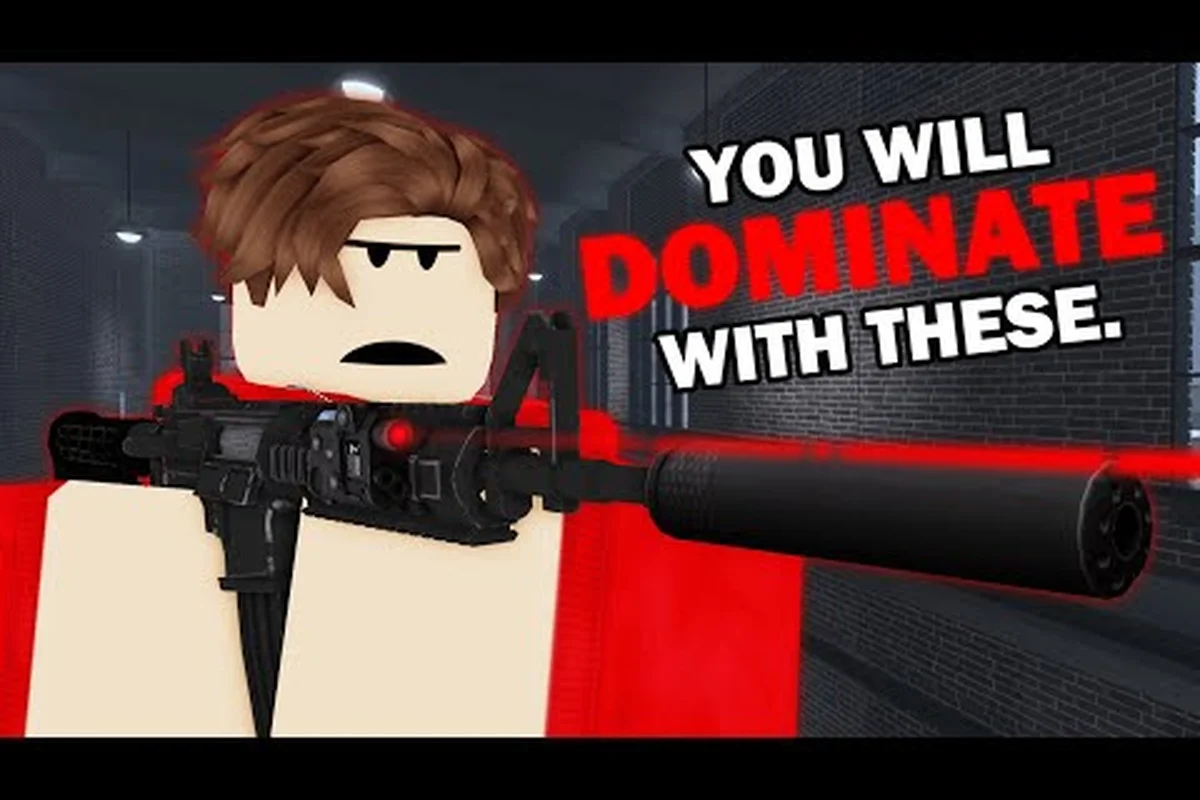
A strong criminality weapon loadout depends on role, not raw power: use a gun for reach, a melee weapon for close control, and utility for survivability. Compare Gun Case #4 builds to create a practical Roblox combo that fits your playstyle.
What Makes a Criminality Weapon Loadout Work?
A criminality weapon loadout works best when every slot answers a different problem. The gun creates distance, the melee option protects you when that distance disappears, and utility gives you another way to create space. Because Criminality has not published official weapon rankings, a useful role-based tier list is more dependable than invented damage numbers or unsupported claims about exact range.
Gun Case #4 is associated with Criminality’s firearm selection, but the game does not publish a complete public breakdown of its case contents or weapon statistics. This guide therefore evaluates available weapon families by practical qualities that players can observe: close-range control, movement potential, reload discipline, versatility, and readability in a fight.
| Loadout role | Primary strength | Secondary strength | Best pairing |
|---|---|---|---|
| General combat | Balanced gun coverage | Melee backup | Rifle or SMG plus Baton |
| Close-range entry | Fast pressure | Fast follow-up | SMG plus Knuckledusters |
| Wide-area control | Sustained distance | Long reach | Rifle plus Machete |
| High-risk entry | Rapid mobility | Backup damage | Shotgun or sidearm plus Knuckledusters |
| Support utility | Space creation | Defensive option | Pepper spray plus gun |
This framework prevents a common mistake: treating every weapon in Criminality as competing for the same slot. The complete Criminality weapon list can help identify what you own, while the decisions below determine how those items should work together.
Criminality Weapon Tier List by Combat Role
A criminality weapon tier list becomes useful when tiers describe intended jobs rather than unsupported power rankings. Gun Case #4 provides the firearm foundation, but a strong build also depends on what happens when the target closes distance, reaches cover, or forces you to switch equipment.
Gun Case #4 Firepower Choices
The gun side of Gun Case #4 includes several recognizable categories: sidearms such as the G-18, FNP-45, and Magnum; compact automatic weapons such as the MP7 and UMP-45; rifles such as the M4A1 and FN-FAL; and a close-focused shotgun option in the Super-Shorty. Exact damage, magazine size, fire rate, range, and reload duration are not published by the developer, so those values should not drive the ranking.
| Gun category | Practical role | Main advantage | Main limitation | Build verdict |
|---|---|---|---|---|
| Sidearm | Flexible secondary | Easy to carry as a backup | Less suitable for prolonged pressure | Solid backup |
| SMG | Close-range entry | Supports fast target acquisition | Less ideal for distant targets | Strong entry pick |
| Rifle | General all-round combat | Balances reach and control | Demands steadier positioning | Top generalist |
| Shotgun | Point-blank pressure | Strong close-range threat | Limited by target spacing | Situational closer |
The G-18 is best treated as a dependable sidearm rather than the centerpiece of a high-risk fight. The Magnum projects a more deliberate image, which can make it useful when you want a weapon that feels distinct from an automatic gun, but no official data establishes that it outperforms the G-18 in damage.
The MP7 and UMP-45 occupy a more aggressive middle ground. Their appeal comes from the apparent mobility of compact firearms, although players should judge their exact handling in-game rather than assume identical performance. The M4A1 and FN-FAL are the clearest generalist choices because rifle slots are naturally associated with flexible engagement distances.
The Super-Shorty completes a shotgun-oriented setup for forcing fights in confined spaces. If that is not the situation you expect, a longer-reaching gun can be more valuable. For a focused look at that weapon family, the Super-Shorty shotgun analysis provides additional context.
Melee Backup Choices
Melee equipment determines what happens after a gun stops being the right answer. The Baton, Machete, and Knuckledusters are presented here as practical role choices rather than confirmed damage tiers. Their reach, handling, and visual footprint differ, but Criminality has not released a full stat sheet that would justify assigning exact values.
| Melee option | Best use | Advantage to look for | Weakness to manage | Partner gun |
|---|---|---|---|---|
| Baton | General-purpose backup | Straightforward reach and control | Less dramatic than a blade in a committed exchange | M4A1 |
| Machete | Aggressive space control | Longest-looking melee profile | Commitment to close range | MP7 |
| Knuckledusters | Rapid close combat | Fast, compact option for quick follow-ups | Less reassuring when enemies remain at range | UMP-45 |
The Baton is the safest default for a criminality weapon loadout because it does not ask the build to revolve around one extreme approach. It works beside a rifle, a sidearm, or an SMG without making the firearm feel irrelevant. That makes the Baton particularly suitable for players who want one straightforward answer to close-range encounters.
The Machete fits a more aggressive build. Its extended profile gives the player a clearer reason to enter a fight, but it also confirms that the encounter has become close-quarters. Pair it with a firearm capable of creating or preserving space, rather than expecting the blade to solve a target that stays beyond comfortable reach.
The Knuckledusters are the most compact melee choice in this comparison. They suit a fast entry setup where switching from a gun should not feel like putting away a large tool. Their value comes from continuity: you can finish moving toward an opponent, switch, and continue the same aggressive momentum without changing the character’s general approach.
Best Criminality Weapon Loadout Builds
The best criminality weapon loadout depends on whether you want stable general-purpose coverage, aggressive entry tools, or a flexible way to adapt during a group encounter. Criminality guns and melee weapons do not need identical stats to work well together; their ranges and handling roles should complement each other without demanding constant improvisation.
Rifle and Baton: The Balanced Build
A rifle paired with the Baton creates the most broadly useful all-purpose setup. The gun handles targets before they reach you, while the Baton remains ready when a route closes, an enemy appears beside you, or ammunition becomes a concern. This is the easiest loadout to explain and the hardest to punish across changing fight conditions.
| Slot | Recommended equipment | Role in the fight | Why it works |
|---|---|---|---|
| Primary gun | M4A1 or FN-FAL | General engagement | Useful across more than one range |
| Close backup | Baton | Last-line defense | Simple and role-neutral |
| Utility | Pepper spray | Space creation | Adds a non-firearm option |
| Secondary | FNP-45 or G-18 | Backup if the primary is unavailable | Preserves basic coverage |
The M4A1 is a natural first choice when familiarity and versatility matter. The FN-FAL is equally relevant for players who prefer the feel of a different rifle profile. Since official numerical comparisons are unavailable, selecting between them should come from the exact weapon you handle more confidently.
The Baton remains the best default melee partner because it does not narrow the rifle build into a specific aggressive style. A player can use the gun to control range, switch to the Baton when cornered, and still have a coherent plan afterward. This makes the combination more forgiving than a setup designed only for rushing.
SMG and Knuckledusters: The Aggressive Entry Build
An SMG paired with the Knuckledusters creates a compact high-pressure build. The MP7 or UMP-45 supports fast entry, while the Knuckledusters let the player continue fighting after closing the gap. The loadout is less forgiving at long distance, so positioning and target selection become as important as the weapons themselves.
| Slot | Recommended equipment | Combat objective | Execution detail |
|---|---|---|---|
| Primary gun | MP7 or UMP-45 | Enter and pressure | Favor targets that allow a close approach |
| Melee | Knuckledusters | Finish at close range | Carry momentum through the switch |
| Utility | Pepper spray | Create separation | Useful when the entry path is blocked |
| Secondary | Magnum or G-18 | Cover re-entry | Helps if the SMG must be holstered |
This setup works best when you are willing to control the fight before committing. A strong SMG user still needs to avoid firing at targets that can simply move away, because no official statistic proves that the firearm’s potential damage compensates for every missed approach. The melee choice protects the build against total failure at close range, not against poor target selection.
The Knuckledusters also fit players who dislike the visual bulk of a blade during repeated switches. If you prefer a more aggressive silhouette and can manage commitment, the Machete can replace them, but that changes the tempo and makes the Machete more central to the build.
Shotgun and Baton: The Close-Range Pressure Build
The Super-Shorty paired with the Baton creates a deliberately aggressive close-range pressure setup. The shotgun encourages early attacks, while the Baton provides a simpler backup when the first exchange becomes awkward. Because no official range or damage figures are available, treat this as a spacing-focused option rather than a guaranteed strongest tier.
| Situation | Shotgun action | Baton action | Better choice |
|---|---|---|---|
| Target at immediate distance | Pressure directly | Reserve for follow-up | Shotgun |
| Target begins moving away | Reposition or stop pushing | Prepare for the closing gap | Baton may be safer |
| Target reaches your side | Switch away from the shotgun | Control the close exchange | Baton |
| Unpredictable mixed range | Hold the angle | Use the shotgun when it fits | Context decides |
The Baton gives this build more resilience than a two-shotgun arrangement without requiring an entirely different playstyle. It also helps when ammunition, movement, or positioning makes a direct shotgun approach impractical. This combination is less generally useful than a rifle setup, but it can be excellent when the surrounding space supports rapid encounters. A broader melee weapon comparison can help distinguish a Baton-style general backup from the Machete and Knuckledusters. The important question is not which option looks strongest, but which one supports the distance at which you actually win fights.
Criminality Guns and Melee Synergy
A criminality weapon loadout succeeds when the firearm creates a favorable starting condition and the melee option handles the worst-case ending. Distance management is the central mechanic. The firearm should make the enemy move on your terms, while the melee item should remain usable if that arrangement breaks down.
| Fight state | Gun-side response | Melee-side response | Loadout check |
|---|---|---|---|
| Open space | Maintain range with rifle or SMG | Do not rush | Distance advantage |
| Tight corridor | Prepare shotgun or automatic fire | Baton or Knuckledusters ready | Close backup |
| Enemy at your flank | Redirect the gun | Switch immediately | Fast backup matters |
| Low visibility | Hold a predictable angle | Choose reach over speed | Melee type matters |
| Resource pressure | Retreat and re-engage | Preserve the option to finish | Ammunition discipline |
This makes the Baton the most broadly compatible of the three melee options discussed here. It is a role-neutral backup, while the Machete is a commitment-heavy closer and the Knuckledusters are a momentum-preserving closer. None is automatically superior because the game has not published comparable numerical data.
A loadout also becomes more practical when its parts answer different failure points. An SMG and Knuckledusters can feel redundant if both demand close range. A rifle and Baton cover a wider set of scenarios, although the setup may not provide the same aggressive flow. Explosive or utility options can widen a build, but their inclusion depends on what you can reliably obtain and use. The explosive and launcher weapon guide covers that separate equipment category.
When to Carry More Than Two Damage Options
Most encounters are easier to read when your primary gun and melee backup have distinct responsibilities. However, a third damage option can be useful when movement and re-engagement are central. Carrying a sidearm alongside an SMG and Knuckledusters creates more options, but each additional item also increases the number of switches you must manage.
| Build | Number of damage tools | Strength | Cost |
|---|---|---|---|
| Rifle, Baton, sidearm | Three | Broad coverage | More equipment management |
| SMG, Knuckledusters | Two | Fast, focused entry | Less flexible at range |
| Shotgun, Baton | Two | Strong close-range identity | Limited by spacing |
| Rifle, Baton, utility | Two damage tools plus utility | Space creation and defense | Utility may be situational |
The best choice depends on your control under pressure. Players who switch confidently can benefit from a third damage option, while those who lose performance during rapid changes may perform better with a smaller set. A loadout cannot compensate for a weapon you never remember to equip.
Building and Testing a Better Loadout
A useful loadout test should measure behavior rather than rely on a fictional tier chart. Criminality does not publish damage, fire-rate, magazine, range, or reload-speed figures, so any precise comparison would be misleading. Instead, test the qualities that shape your results: acquisition speed, target spacing, switching confidence, and whether the backup remains available when needed.
| Test stage | What to observe | Question to answer | Adjustment |
|---|---|---|---|
| Opening exchange | First target and first response | Does the gun suit the spacing? | Change gun category if needed |
| Close encounter | Distance when contact begins | Does melee have time to matter? | Prefer faster-switching backup |
| Resource pressure | Missed or reloaded attempts | Is ammunition a recurring issue? | Simplify damage options |
| Route change | Encounter from another angle | Does the build still cover roles? | Add utility or a sidearm |
| Repeated match | Consistency across similar fights | Is the setup learnable? | Keep the same core loadout |
A controlled test is more valuable than switching every weapon after one result. If you immediately change the gun, melee item, and utility each time an exchange goes badly, it becomes difficult to identify what improved. Keep the main firearm fixed for a session, change only one slot, and observe whether the failure point changes.
The reload-speed factor deserves attention even without a published duration. A weapon that is comfortable to use but constantly needs reloading may suit a different role than one that is ready when the first shot is needed. Likewise, a fast melee switch can be more valuable than a dramatic-looking blade if the fight has already entered point-blank range.
Progression affects what you can test. If several options remain locked, consult the Criminality leveling and unlock guide before planning around gear you cannot equip. Weapon access and in-game cash remain real constraints even when the Weaponry pass covers many weapon categories.
Frequently Asked Questions
What is the best Criminality weapon loadout for general use?
A rifle with a Baton and a sidearm is a strong general-use criminality weapon loadout because it separates ranged, close, and backup roles. The M4A1 or FN-FAL handles normal engagements, while the Baton covers sudden close contact. Pepper spray can replace the sidearm when space creation matters more than another damage option.
Is the Criminality Machete better than the Baton?
Neither has a confirmed universal advantage because the game has not published comparable melee statistics. The Machete suits players who prefer a committed close-range approach and can reach targets. The Baton is more flexible beside a rifle because it provides straightforward backup without defining the entire build around a blade-style rush.
Should a Criminality weapon loadout include Knuckledusters?
Yes, when the primary gun is an SMG and you often win fights at close distance. Knuckledusters preserve momentum after a quick switch and can make an aggressive entry build feel coherent. They are less useful when opponents keep their distance, so a rifle or sidearm is generally the better pairing for those matchups.
What is the most flexible criminality weapon tier list for Gun Case #4?
The most flexible setup uses a rifle as the general-purpose gun, a sidearm as a fallback, and a Baton for close contact. An MP7, UMP-45, or Super-Shorty can produce a more specialized build, but the available items and your preferred spacing should determine the final choice rather than an invented damage ranking.
Can Criminality guns replace every melee weapon?
They can handle many encounters, but carrying a melee backup protects against targets that reach you unexpectedly, blocked routes, and situations where you want to stop shooting. The Baton, Machete, and Knuckledusters each support a different fighting pattern. A balanced criminality weapon loadout uses one as a contingency rather than treating it as a mandatory damage race.